
GYM TO CRAG: BOULDERING ETIQUETTE EVERY CLIMBER NEEDS TO KNOW
By Milo Alder
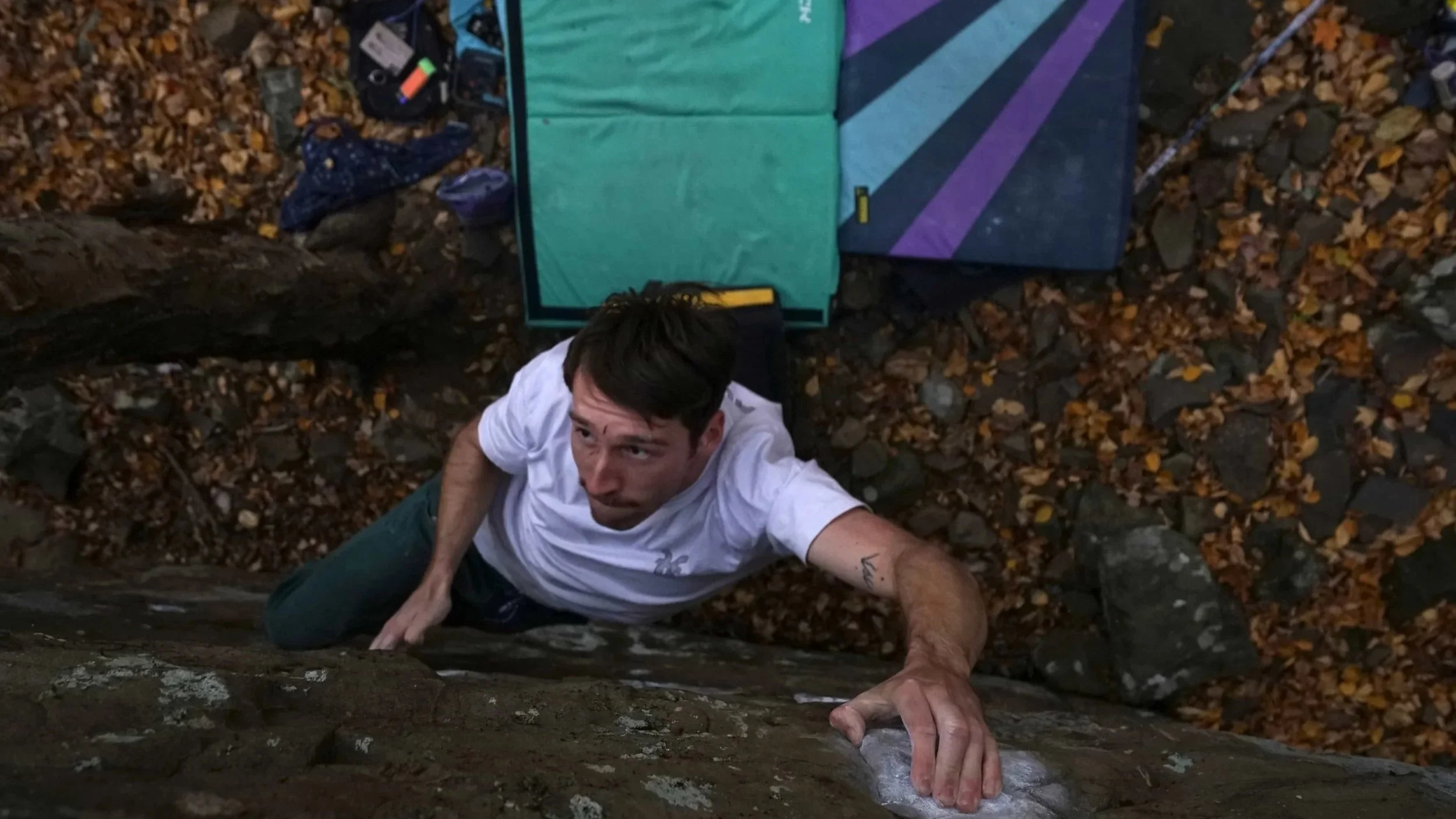
Parker Smith on The Test in Southington, CT (Photo: Dylan Wojteczko)
So, you’ve been having fun in the gym, climbing your heart out multiple times a week, and you’re ready to venture into the world of outdoor climbing. Amazing!
However, before you venture into the great outdoors and send some boulders, it is important to understand the ethics of bouldering outdoors. This post will teach you the basics of understanding outdoor ethics, the do’s and don’ts, and what to expect. It’s lengthy, but there’s a lot you should know before heading out — so please take the time to read it!
THE BASICS
Alright, you’ve chosen a date, a location and you're going outside! Your shoes are ready, your crashpad is on your back, and you’ve packed some crag snacks to help fuel you for the sends. Here are some things you should know while you’re on the approach to your boulder of choice.
LEAVE NO TRACE
Climbers are encouraged to follow the principles of Leave No Trace, which means that you want to try and leave the outdoors as clean and trace-free as you can. For climbing specifically, you should strive to:
Stay on designated paths, trails or durable surfaces whenever you can.
There will inevitably be a time where a boulder is hard to locate, bushwhack-y, or the trail is hard to come by. When you can, staying on trails can help minimize damage done to the surrounding wilderness.
Pick up any trash, including tape, plastic, wrappers, etc.
Picking up other people’s trash is greatly appreciated, and helps crags stay beautiful!
Brushing tick marks.
A tick mark is a little line of chalk to help you find a hold. Leaving tick marks on boulders leave obvious signs of human interaction, so brushing them is heavily encouraged.
No chipping boulders.
Chipping a boulder is where you artificially change a piece of rock using tools to break it. This is NEVER okay, not only does it break the rock (leaving a trace), but it ruins the experience for other climbers.
Dispose of waste properly.
Everyone has to use the bathroom, but if you have to while outdoors, please be responsible. NEVER leave human waste behind.
AT THE BOULDER
Be kind to others.
It should go without saying, try to be kind and courteous to the others at the boulder. You should make sure to take turns, keep your belongings in an organized manner, and just generally be a nice person to the others around you; nobody likes a rude person.
Don’t spray unsolicited beta.
Spraying beta is the act of explaining how to climb the boulder to another person. While this is okay to do if the other person is okay with it, you should always ask before giving unsolicited advice to others.
Think before bringing your dog.
Many people bring dogs to the crag, but you should make sure that everyone at the boulder is okay with your dog being there. If someone doesn’t want the dog there, you should probably head to another boulder. If your dog is noisy or is not good around other people or dogs, it should probably stay home. Always follow posted pet and leash rules.
Wipe your shoes off before attempts.
Make sure to wipe your shoes off if you step in dirt or mud, because gunking up the rock makes climbs harder for everyone, and it can permanently polish or damage the rock.
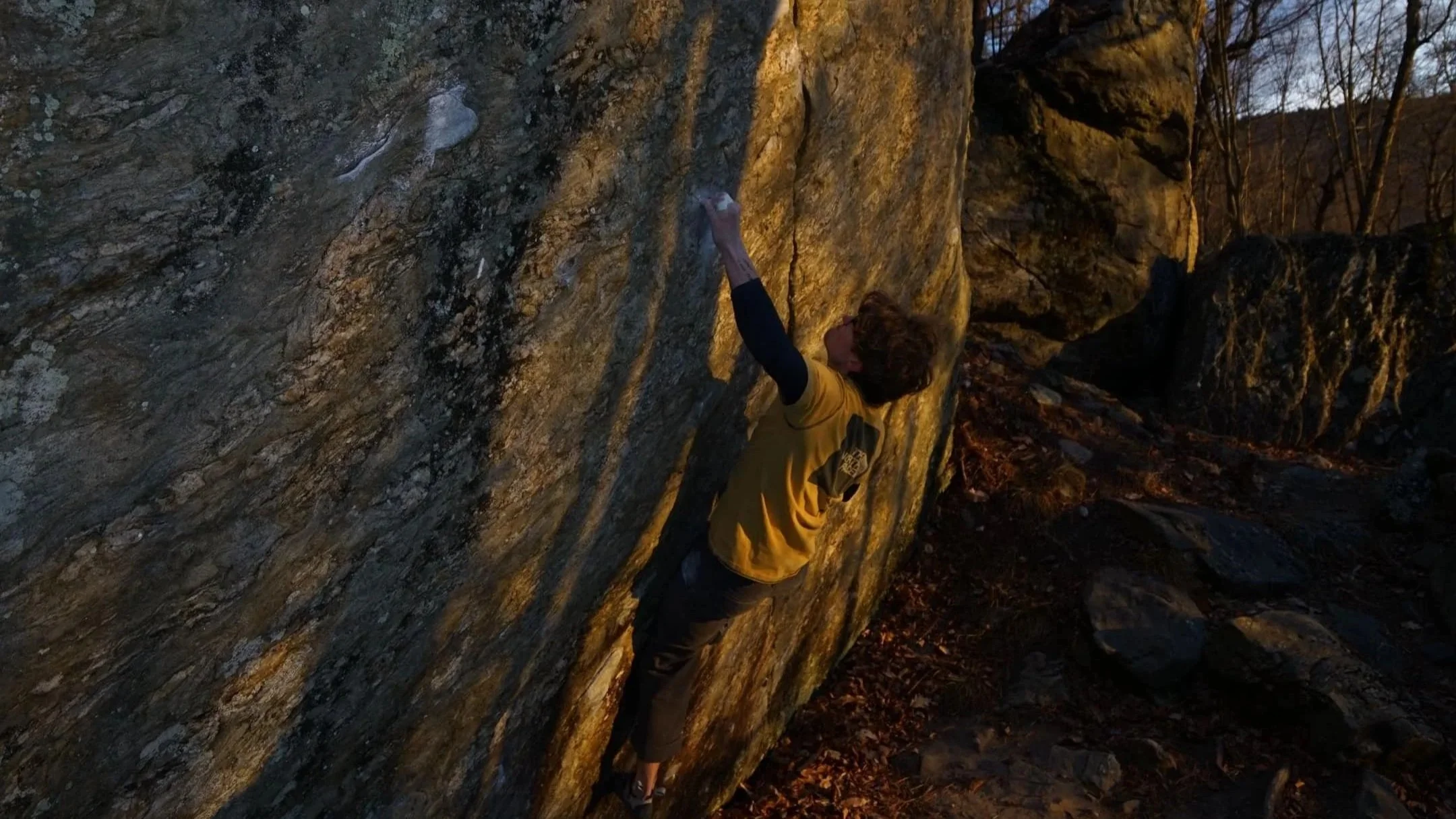
Grey DiMascio on Fatwa in Great Barrington, MA (Photo: Dylan Wojteczko)
PRIVATE PROPERTY
How climbers behave at the crag matters beyond just that day's session — it directly shapes how landowners and land managers view the climbing community as a whole. One bad experience can close an area for everyone. That's why following the rules and ethics of every area isn't just good manners, it's how we protect access for the future.
Many boulders in Connecticut, New York, and Massachusetts sit on private property, but that doesn't automatically mean you can't climb there. Farley, Massachusetts is a great example — some of the best bouldering in New England, most of it on private land, is kept open for climbers thanks to the hard work of the WMCC (Western Massachusetts Climbers Coalition) in securing formal agreements with landowners. Not every area is that lucky, so always check before you go. If access seems sketchy or legally questionable, please skip it.
One more big one: never post information online about how to approach, park at, or access private boulders — unless you know it's explicitly allowed. If you can't find an area on the internet, that may be intentional. Ask locals for beta instead. Posting videos of yourself climbing is generally fine, as long as you're not giving away location details — but if you think even that could jeopardize access, err on the side of not posting.
The last thing any of us want is to lose a great spot because someone overshared.
OTHER CONSIDERATIONS
Every crag is different.
This guide covers the basics, but every crag has its own customs and rules. Out west, for example, climbing on sandstone after rain is a no-go since wet rock breaks more easily. Always do your homework before visiting a new area — guidebooks and locals are your best resources. When in doubt, ask.
Parking can be an issue at certain crags.
You should make sure that you are only parking in designated, legal areas, and should try to carpool as much as possible to relieve pressure on crowded areas. If parking is filled to the brim with cars, and there aren’t any more places to park, you should go somewhere else.
Night climbing.
Night climbing is almost always not allowed in New England, and you should try to be out of the bouldering area by dusk. Night climbing can be harmful to access, so unless it is specifically permitted, you should assume you cannot climb after dark.
Waivers.
Certain bouldering locations (such as Powerlinez in New York) require that waivers are filled out in order to climb there. In Meriden, Connecticut a waiver and inexpensive climber permit is required.
Paying.
Some crags (like the Gunks in New York) require that you pay a daily fee in order to park/climb. You should always make sure to pay these fees, since they allow legal access to climbing areas, while providing resources to these locations.
You made it to the end! On behalf of the outdoor community, we are extremely grateful that you took the time to read this article, and understand what you need to do to keep outdoor climbing public and great for everyone. If you made it to this point, you should also consider supporting local climbing organizations, since they help keep these areas open to everyone, and help open up areas that otherwise wouldn’t be.
LOCAL CLIMBING ORGANIZATIONS
Ragged Mountain Foundation (Connecticut)
Western Massachusetts Climbers’ Coalition (Massachusetts)
Torne Valley Climbers’ Coalition (New York)
Gunks Climbers’ Coalition (New York)
Crag VT (Vermont)
Access Fund (Everywhere)
Thank you for reading
🌟
Thank you for reading 🌟
